Community Spotlight: Kristen Millares Young
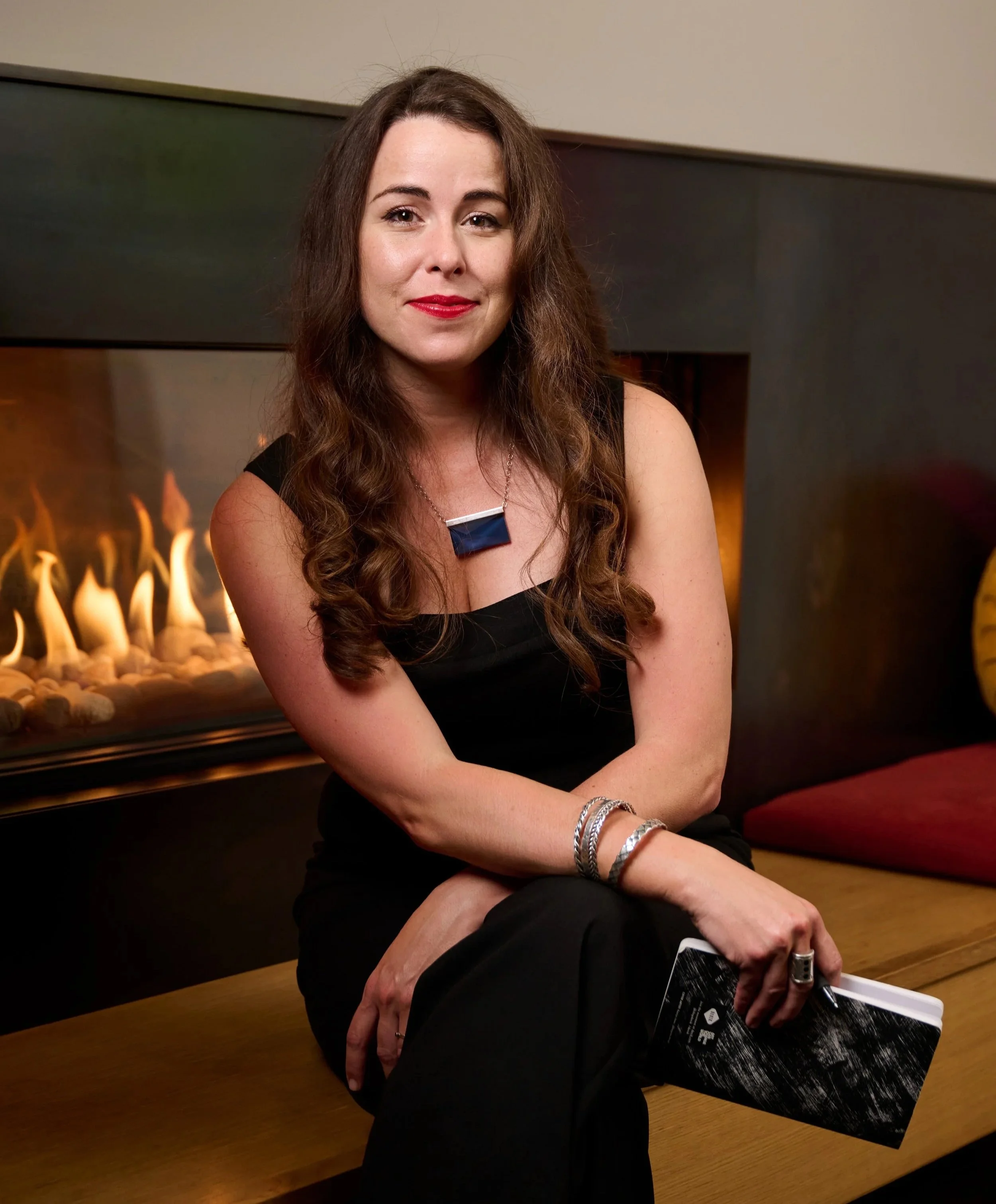
 

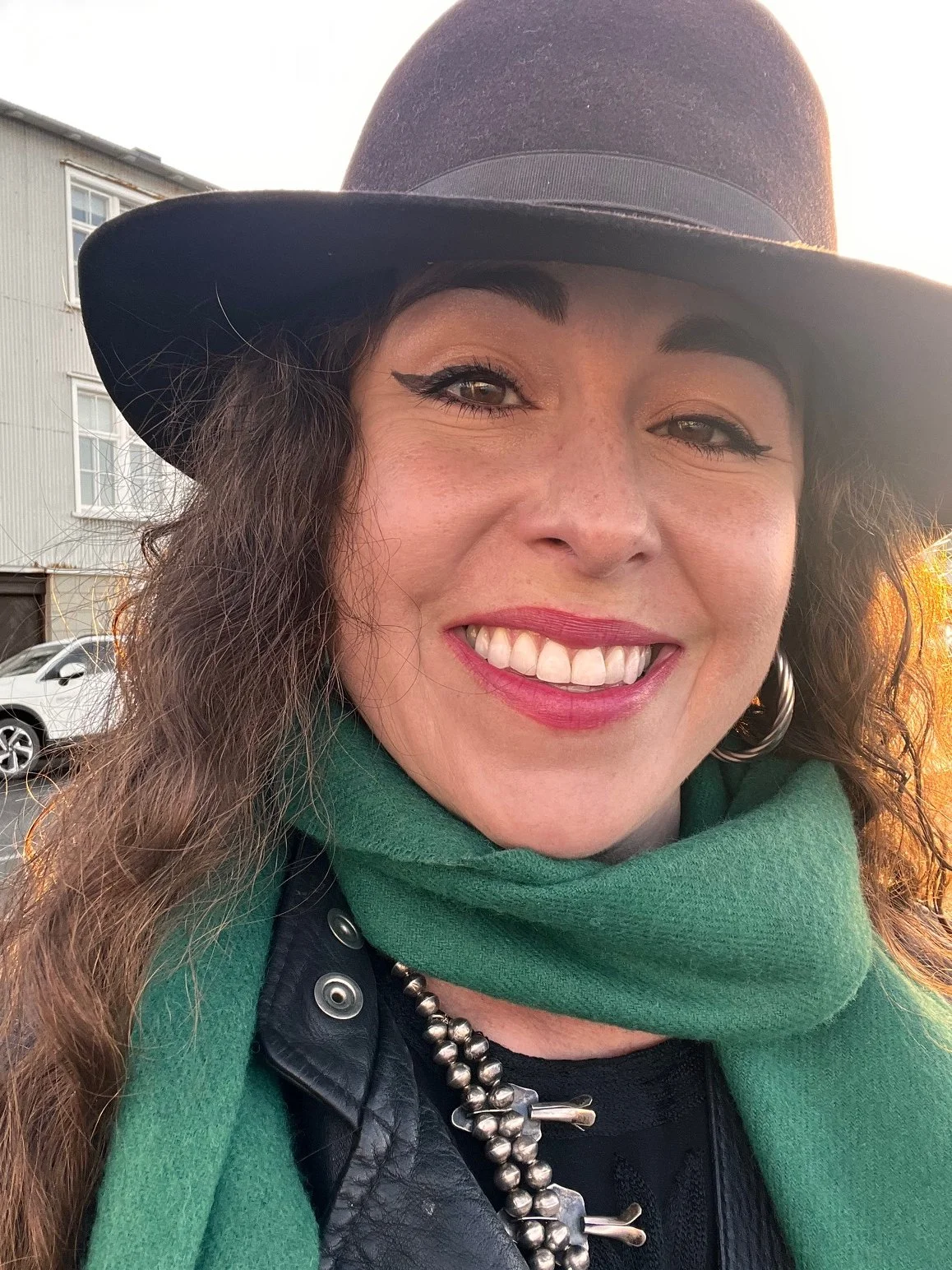
Kristen Millares Young (Portrait by Chona Kasinger)


Jennie Shortridge: Hi Kristen! Thanks so much for answering some questions for us. You have a new book coming out, right? Can you tell us more about that?

Kristen Millares Young: Thanks for asking, Jennie. I’ve spent the past ten years investigating a pagan mother goddess cult whose remnants I encountered beneath an old stone church not far from my ancestral village in northwestern Spain.

Like most origin myths, including those of my Cuban matriarchy in diaspora, the story of the great mother goddess Cybele has many tellings, and it’s hard to say if any of them are true. Cybele was a fearsome goddess whose dominance in the Roman era was erased by the rise of the Virgin Mary, though Cybele was no virgin.

In my memoir Desire Lines, I reckon with the silences that move beneath generations. Let’s put it this way: I backed my way into making Desire Lines, and if I had known I was going to write a memoir, I might not have allowed myself to become a writer at all. But here we are. Desire Lines will be published by Red Hen Press on October 6, 2026.

JS: I’ve been seeing some buzz about it…

KMY: Yes! Mil gracias to Ms. Magazine for naming Desire Lines a most anticipated feminist book of 2026 and to People magazine for revealing the cover alongside my first interview.

I am going to launch Desire Lines at Elliott Bay Book Company on Friday, October 9th. My dear friend, the Salon critic Melanie McFarland, will moderate our discussion of the lyric essay, the pagan bedrock beneath Catholic icons, Latinidad and the complications of motherhood within the patriarchy, and the enduring power of the divine feminine.

JS: For those who don’t know the many hats you wear (and have worn) in Seattle’s literary community, can you tell us some of your career highlights?

KMY: Well, let’s see. From 2018 to 2026, I reviewed dozens of books for the Washington Post, whose diminishment is a good reminder that oligarchs should not control the means by which we inform each other of vital truths. RIP, Book World.  I am in talks with other outlets, but I want to take a moment to praise my editor Stephanie Merry for encouraging me to bring queer, BIPOC and indie thought into the canon.

I just wrapped up five years with the Humanities Washington Speakers Bureau, crisscrossing the state to serve 800 writers with fifty free and bilingual creative writing workshops. After a series of distinguished visiting writer gigs, I have joined the faculty of a low residency MFA program hosted by Oregon State University’s Cascades campus in Bend, Oregon.

A little while back, I edited SEISMIC — Seattle, City of Literature, an essay collection that reflects on the UNESCO designation by which “Seattle’s literary reputation was solidified on the world stage,” according to the Seattle Times. A 2021 Washington State Book Award finalist available via free download, SEISMIC opens with an exhortation by Rena Priest (Lhaq’temish (Lummi) Nation) and closes with an oral history by Ken Workman (Duwamish).

JS: Okay, let’s talk about Iceland. We were so pleased when you were selected for the residency in our sister City of Lit Reykjavik last November. What was that experience like for you?

KMY: Reykjavík’s literary scene is how I imagined 1920s Paris to be.

JS: How wonderful! 

KMY: To give you an idea, I walked into Kaffi Vest, a café across the street from the Vesturbæjarlaug geothermal pool. I was a bit early because I was going to meet Sjón. The author of Moonstone and The Blue Fox, Sjón was in an anarcho-Surrealist political party that came to power through satire. An interesting thinker. Anyhow, I was trying to get a seat, and there were some of the country’s foremost writers, stacked table upon table: Auður Ava Ólafsdóttir (Miss Iceland), Jón Kalman Stefánsson (Fish Have No Feet), Thóra Hjörleifsdóttir (Magma), and Eva Rún Snorradóttir (author of Older Women and co-founder of the Queer Situations festival). We said hello and gave hugs.

After interviewing thirty leading authors and feminists for my project, I came to think of Reykjavík as a global village. I kept running into intellectuals on the street.

JS: What other impressions of Iceland did you come away with?

KMY: The Icelanders I met are hardworking, ethical, funny, thoughtful, direct, and erudite. Even when the country’s residents lived in crushing poverty for centuries, they read the sagas and treasured poetry. Amidst a high literary culture which now includes free college tuition and grant-based salaries to artists, the writers I met have more capacity to write their books.

The hustle is real and ongoing, but health care, parental leave divided between both parents, and access to early childhood care make a real difference in society. America should try spending less on war and more on care.

JS: So, what was your focus project while you were there?

KMY: I went to Reykjavík hoping to understand the literary and sociocultural context for the 50th anniversary of the Icelandic Women’s Day Off. In 1975, ninety percent of Icelandic women went on strike, effectively shutting the country down. They didn’t call it a strike – too political. Instead, they called it a “day off” – and who doesn’t deserve a day off?

But truly, the Women’s Day Off, or Kvennafrídagurinn, was anything but. Mass mobilizations led to walkouts, from factories and daycares to homes and the holds of ships. One year later in 1976, a gender equality bill passed the Icelandic parliament, paving the way for the world’s first nationally elected female president and a host of ongoing reforms.

For the first time, Iceland’s government is run by a majority of women: both the president and the prime minister are women, most of its cabinet ministers are women, and the coalition that took power in 2024 was formed by three women-led parties. Iceland has led the world in gender equality for fifteen years, according to the World Economic Forum.

Iceland is a good model for what is possible when a country values women and the arts. And yet, forty percent of Icelandic women have endured domestic violence, and the nation’s leading experts say that the judicial system cannot deliver justice to survivors of sexual assault.

How to create liberty within a system which, while leading the world in gender equity, can become complacent? And what can we, as Americans, learn from a country whose model is far more equitable than what we’re dealing with at home?

In my Electric Literature list of feminist Icelandic books, contemporary authors invoke the incongruence of living in a country with gender balanced policies alongside high rates of domestic violence, persistent pay disparities, and other forms of misogynistic disregard.

I’m still at work on the larger story, untangling why empathy built on gender empowerment and a well-read culture isn’t enough to claim a feminist utopia. It is something deeper, more intrinsic, that determines a society’s values, beyond the showcase of government positions and the Christmas Book Flood. It is the violent reality of men and of domestic expectations, and lurking at the foundation, a sense of belonging denied by the systems that society is built upon. 

JS: International UNESCO Cities of Literature residencies come up several times during the year, and we post those calls for submissions on our social media and in our newsletters. Do you feel any Seattle writer could benefit from such a residency, or only if they’re working on a project closely aligned with the residency city? 

KMY: Absolutely. And yet, it takes some doing to create a worthwhile project that aligns a writer’s interests with a residency city. Their selection committees consider hundreds of applications in many cases, particularly if there is a global call. Be judicious but go for it.

My thanks to Kjartan Már Ómarsson of Reykjavík Bókmenntaborg UNESCO and Inga María Leifsdóttir, project manager for Reykjavík City of Culture, for their support during my residency.

JS: And finally, any last words for our readers?

KMY: Social paralysis and isolation are the intended effects of cruel governments. Be with the folks who value your personhood, and make a plan for collective action. Pa’lante.

JS: Thank you, Kristen, and good luck with the new book!

Kristen’s memoir, Desire Lines, will be published October 6, 2026, and her launch event takes place at Elliott Bay Book Company on October 9, 2026. Mark your calendars!
/

Community Spotlight: Rod Driver, Comics Artist and 2025 Microgrant Winner


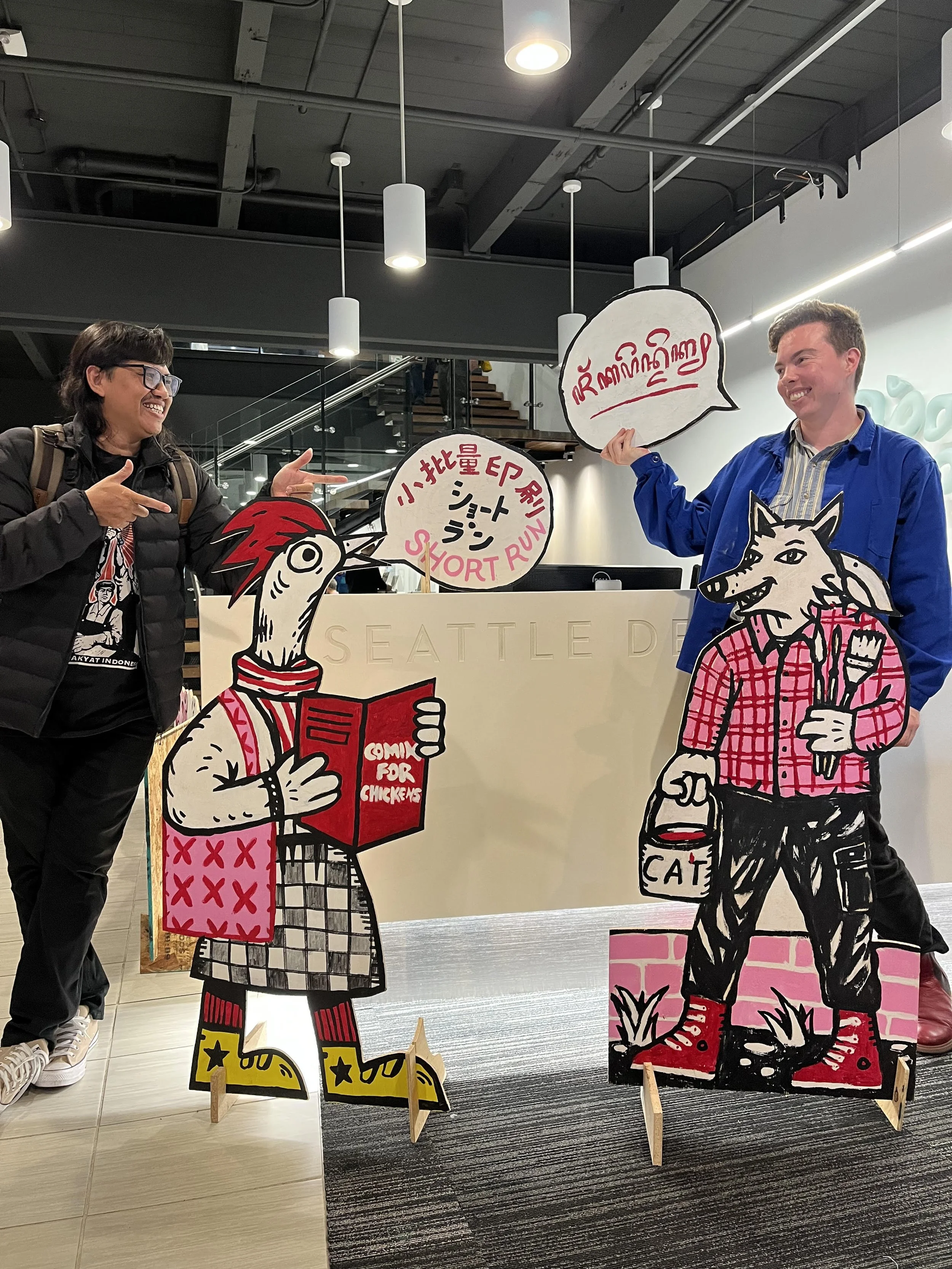
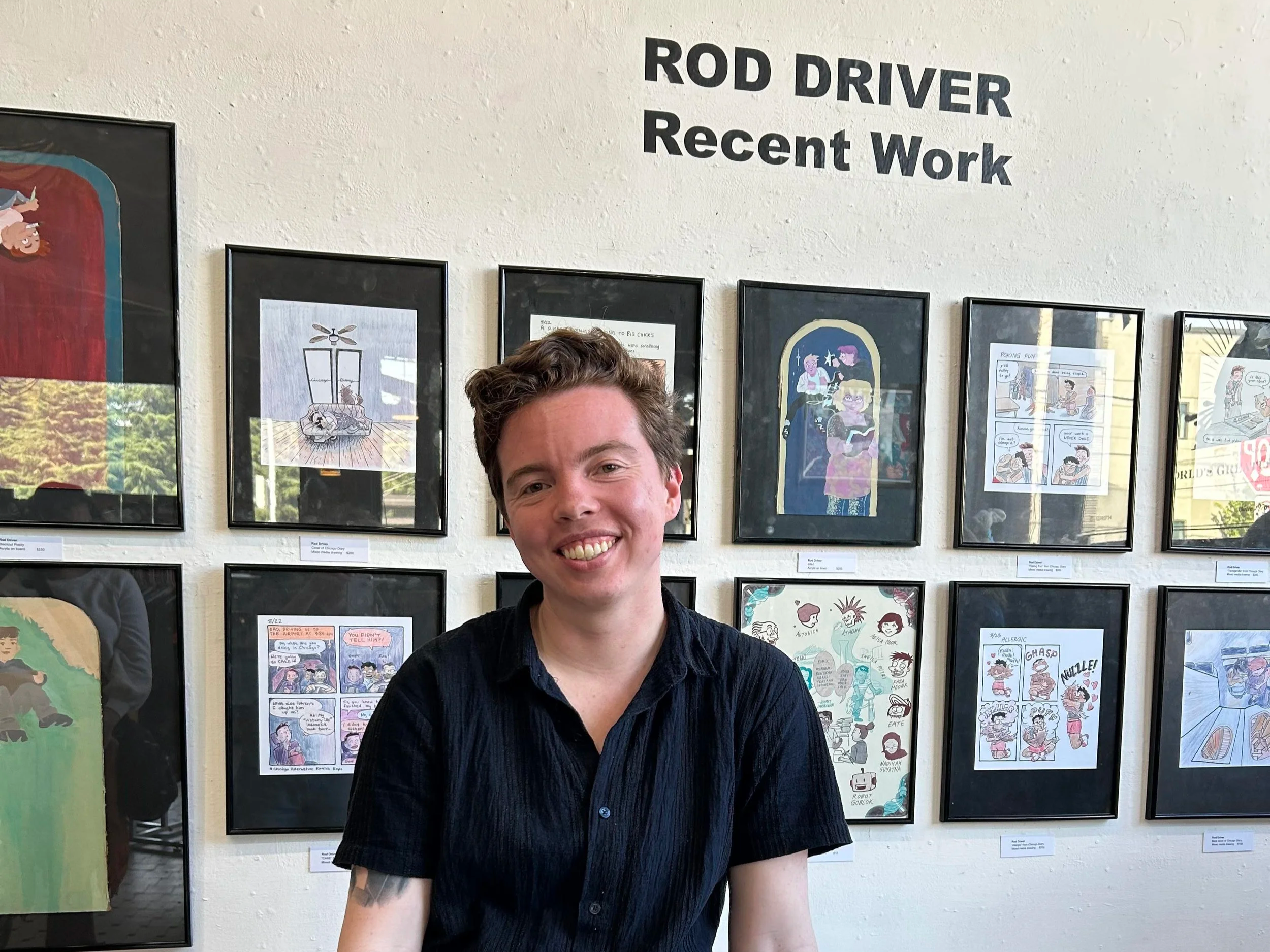
Rod Driver stands in front of his show at Fantagraphics, in Seattle.


Rod Driver is a Seattle comics artist, an inspiring international community builder, and one of our very first Microgrant award winners last year. We checked in with him this month to hear more about how his international arts endeavors are going.

Jennie Shortridge: Congratulations on winning a Seattle City of Lit Microgrant award, Rod! Can you describe the project you applied for, and how you’re using your Microgrant?

Rod Driver: I’m supplementing an artist exchange I’m funding between Indonesian and American cartoonists. This year I invited Yudha Sandy and Danang Catur, two accomplished artists who organize the Yogyakarta Komik Weeks festival, to come as special guests of Short Run Comix Fest. I interviewed them at Short Run, they did live readings and music performance, and we did a workshop in partnership with Capitol Hill Tool library where we made wooden decorations for the Short Run venue. We also sent Danang and Sandy original art from the other Short Run guest artists, and they had a special Short Run gallery space at this year’s Yogyakarta Komik Weeks!

JS: Wow, what an opportunity for so many artists! How did you originally get involved with the Indonesian artists community?

RD: In 2019 I won a Watson Fellowship, an amazing opportunity for self-directed international study. My project was to study cartoonist communities. Some people in my network pointed me toward Australia and Germany as project countries.

Rod Driver interviews Yudha Sandy and Danang Catur at Short Run Comix Festival November 2025.

Rod Driver interviews Yudha Sandy and Danang Catur at Short Run Comix Festival, November 2025.

While I was doing recon into German comics, I stumbled upon the Goethe Institute website spotlighting Indonesian comics. The history and variety of work seemed really interesting, so I cold-emailed the project director, Dewi Noviami, and the rest was history.
I used the fellowship to travel to Indonesia. Dewi introduced me to Beng Rahadian, a graphic art professor who became a foundational source for me. It branched out from there, and I became invested in the research I was doing in Indonesia to the point that it became the sole subject of the graphic novel I was writing about cartoonist communities! That book became Komik-Komik Sama-Sama: Adventures in Indonesian Art and Liberation, which I finished in October 2024.

I was only able to complete half my research trip in Indonesia before the early days of Covid lockdown happened. So by 2024 I was like, OK, I’ve been holed up writing comics for four years, and I still have half of this huge grant. I’m gonna do something with that money that keeps the spirit of exchange going and gets me more involved in the communities that I’ve participated in and written about.  I decided to share my good fortune with other cartoonists, so I started this project.

JS: That’s a generous and inspiring way to use your Microgrant, Rod. Tell us more about your time with Danang and Sandy at Short Run.

RD: Danang and Sandy are both incredible people-connectors, and I got to bask in that glow. I made a bunch of new friends in town because so many people came out of the woodwork to meet them. It’s hard to sum up their trip because there was just so much pleasure and fun. They played live at the Short Run opening party as their band Los Fungos, and Sandy made a tiny lyric zine that I passed out to the crowd to encourage them to try to sing along in Indonesian. I introduced them to Halloween and we carved jack-o-lanterns. They introduced me to an Indonesian ramen dish called Internet (‘Indomie’ instant noodles + telur (egg) + ‘Coronet’ canned corner beef) that we dressed up with wild local mushrooms gifted to us by a kindly restaurant owner we met at a dive bar.  I loved seeing the books that they brought to distribute for their colleagues back in Yogyakarta. I was totally hyping up their table at the festival - who wouldn’t want some incredible, limited edition Indonesian comics?

One of my own acquisitions was They Murdered Munir!!, a graphic novel illustrated by artist/lecturer Terra Bajraghosa (with writer Eko Prasetyo) with a new English translation by art archivist and organizer Sukma Smita. An indictment of the human rights abuses of the Suharto dictatorship, it was written contemporaneously but held on ice until its publication several years after the end of the regime. Munir also tied into conversations I was having with Sandy and Danang about current events in Indonesia and the US. It’s such a potent and fascinating document that I’d wanted to get my hands on for a long time, especially since Terra and Sukma are both friends of mine who were totally foundational to my own book. 

Danang and Sandy have also expressed a strong desire for more Short Run artists to come present at Komik Weeks, so next year I’m hoping to visit their festival, Yogyakarta Komik Weeks, and bring two other local Northwest cartoonists. 

I definitely recommend finding Danang and Sandy on social media - @caturdanang, @yudhasandyyy, and @mulyakarya_yk (their art organizing collective). Sandy in particular posted tons of cool videos documenting their visit. 

Rod and Danang pose with artwork they made for the Short Run festival.


JS: You’ve created such rich and meaningful connections with this project, Rod. So, what brought you to this art form? What made you want to create comics?

RD: I’ve always drawn, and I’ve always read comics. My most formative comic book was Larry Gonick’s Cartoon History of the Universe, which I read when I was about nine. That’s what made me want to do nonfiction comics.

JS: And what are your personal goals for the work you create?

RD: For a long time, my main goal was to inspire people to dive into new subjects and convey a sense of wonder. I think I’m generally good at that - Komik-Komik Sama-Sama is the most recent example - but my new goal is to write more personally and vulnerably. The closest I’ve gotten so far is my latest self-deprecating diary gag comics Chicago Diary and Tiny Crap Drawer

JS: As we near the end of the year, tell us what’s coming up for you in 2026.

RD: I’m looking forward to continuing the artist exchange and hopefully getting a couple of colleagues together for an Indonesia trip next year. You can check out @yarndollcomics for updates and new comics. 

JS: Thanks so much, Rod, for all you do. We wish you continued success and connection in the new year!

Learn more about Rod’s work at his website.

/

International Residency Opportunities

Dreaming of finishing your writing project in 2026? Why not apply for an international residency?

 
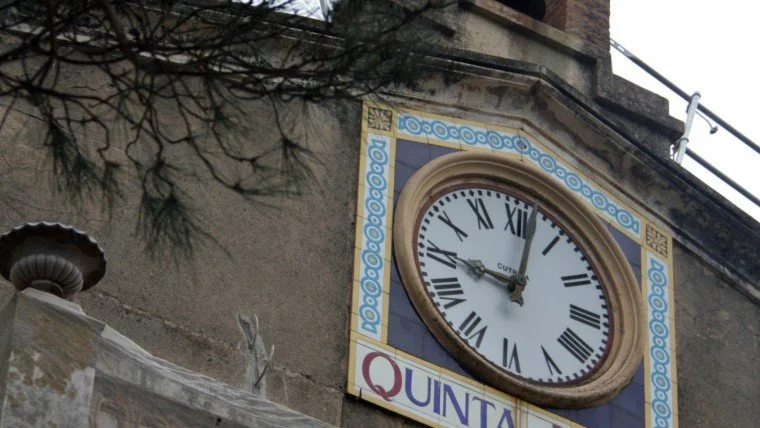
Photo of a clock on a building in Barcelona
 

Barcelona just launched the call for applications to their writing residency for 2026. The programme offers creative stays for international authors and translators with literary projects connected to the city.
Eligible applicants include authors of fiction, poetry, playwriting, comics, literary journalism, and audiovisual scripts, as well as translators with at least one published or premiered work. The projects must have an explicit link to Barcelona, which will be assessed alongside the applicant’s career and the literary quality of the proposal. Applications should be submitted no later than January 16th. Find more information here.


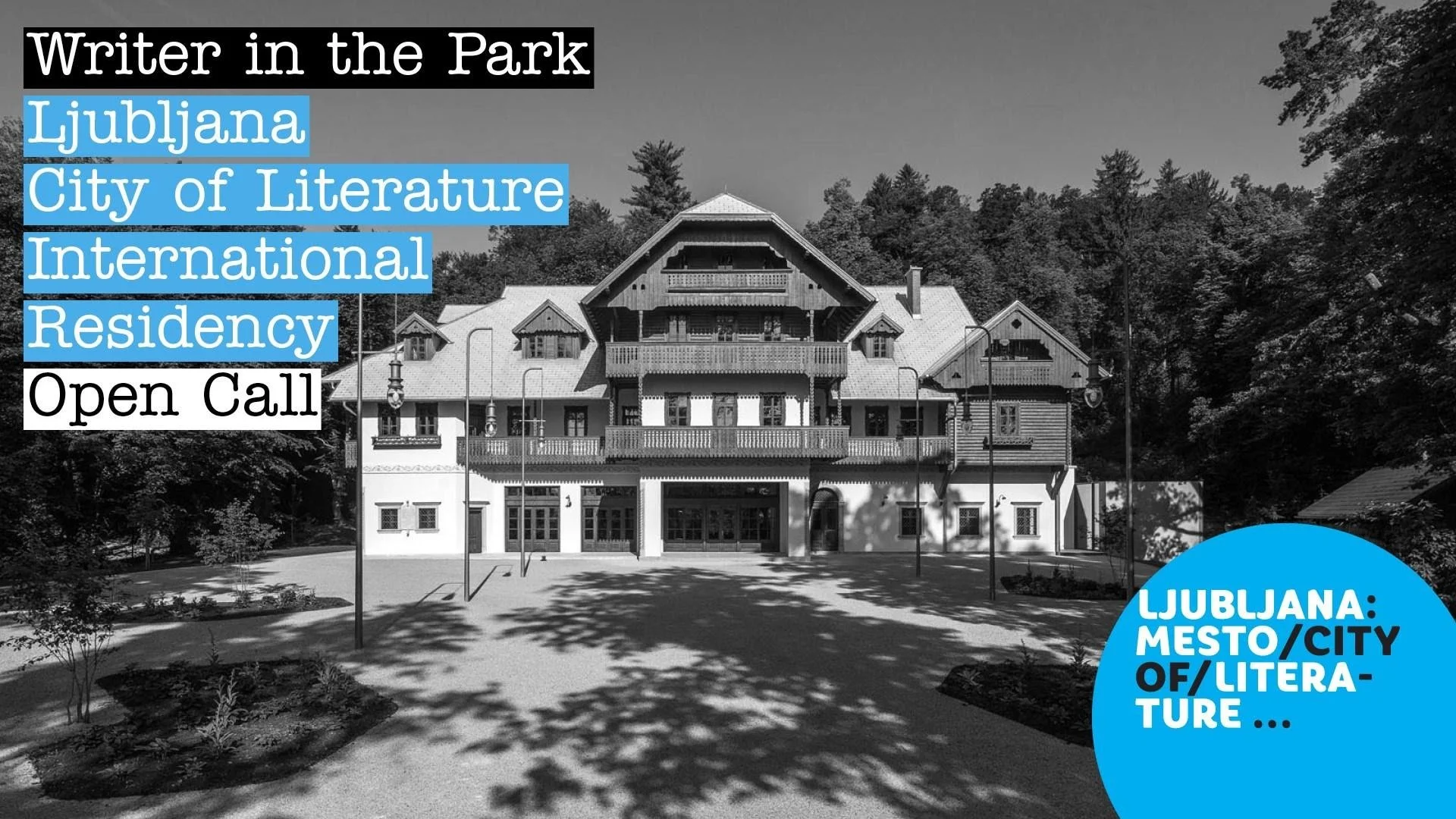
A black and white image of Švicarija/Swisshouse Creative Centre in Ljubljana.
 

Ljubljana, a UNESCO City of Literature since 2015, offers two one-month residencies for writers at the Švicarija/Swisshouse Creative Centre, which is part of the International Centre of Graphic Arts. The residency periods are April 1–30, 2026, and November 1–30, 2026. The residency is aimed at foreign published writers from other UNESCO Cities of Literature. The applicant must have published at least one book of fiction (be it prose, poetry or drama) in their language. There are no restrictions regarding age, race, gender, nationality or other personal/aesthetic preferences. Though writers of all genres are currently welcome to apply, a specific focus might be chosen for calls in the following years.

Deadline for submissions: January 19, 2026. Registration form, information and requirements are here.

/

Congratulations to the New Cities of Literature!


Today UNESCO has announced the designation of 58 new Creative Cities in total across eight art forms to join its Creative Cities Network, making for a total of 408 Creative Cities from more than 100 countries worldwide.

Among these new Creative Cities, ten have been designated in Literature: Aberystwyth (Wales); Abuja (Nigeria); Celje (Slovenia); Conakry (Guinea); Dumaguete City (Philippines); Gdańsk (Poland); Kahramanmaraş (Türkiye); Lund (Sweden); San Luis Potosi (Mexico); and Tangier (Morocco). The UNESCO Creative Cities of Literature extend their congratulations and a warm welcome to their new sibling Cities and look forward to collaborating to promote the power of literature for sustainable and inclusive societies.

Kjartan Már Ómarsson, Program Manager of Reykjavík UNESCO City of Literature and Creative Cities of Literature Network Lead says:

“We warmly welcome the new Cities of Literature to our global network. Their creativity, diversity, and commitment to the written word will strengthen our collective mission to place culture and storytelling at the heart of sustainable and inclusive urban development.”

 
/